Panarchy
See how cycles at different scales interact.
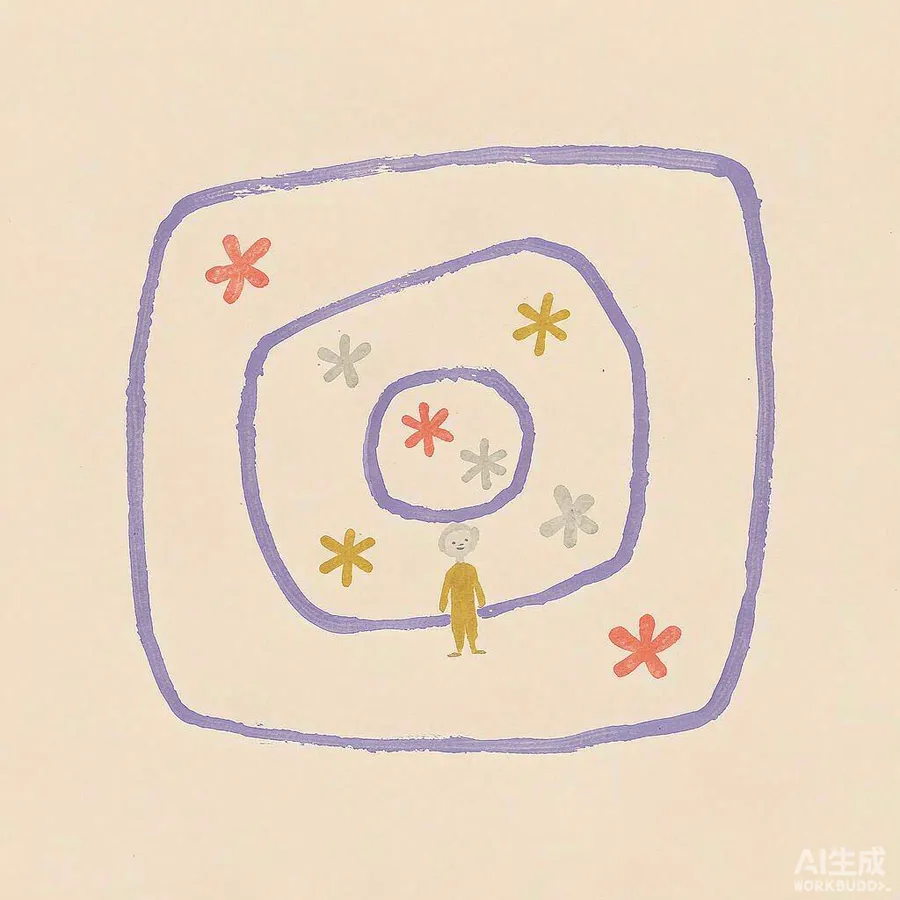
Nested systems, each with its own cycle, mapped together so that the level blocking change becomes visible.
Time
90 min
Group
4-12
Output
A nested cycle map
Move
Synthesize
Run sheet
How to run it
4 steps · 90 min
- 01
Identify the nested systems
- 02
Map each one on its own cycle
- 03
Note where they reinforce or block
- 04
Find the leverage point
Say this
Lines you can read out as they are — no improvising under pressure.
“Which level absorbs our change?”
“Where are two cycles out of step?”
“What is fast here that should be slow, and vice versa?”
Set up
Before they walk in
- □The nested levels named: team, organisation, market, regulation
- □A cycle drawn for each
- □Arrows for where they reinforce or block
What to watch for
Signals and traps
It is working when
- the blocking level turns out to be one nobody had mapped
It usually fails when
- only two levels drawn
- the map used to justify inaction
If it stalls, or the room is the wrong size
Variations
Start from the level that keeps failing
Draw it for a change that succeeded and compare
Add time: when does each cycle turn
Background
Where it comes from
From Liberating Structures, on the adaptive-cycle thinking of Gunderson and Holling. Change at one level often fails because a slower level above it, or a faster one below, undoes it.
Cautions
When it does more harm than good
- Map at least three levels
- Look for the level that absorbs the change
- The leverage point is usually where two cycles meet
When to use
Reach for it when…
Change at one level keeps failing
You need a system view
Source
Lipmanowicz, H., & McCandless, K. (2013). The Surprising Power of Liberating Structures.
Source phase: My methods (Kumar). Steps and the run sheet are written for this library, not quoted from the source.