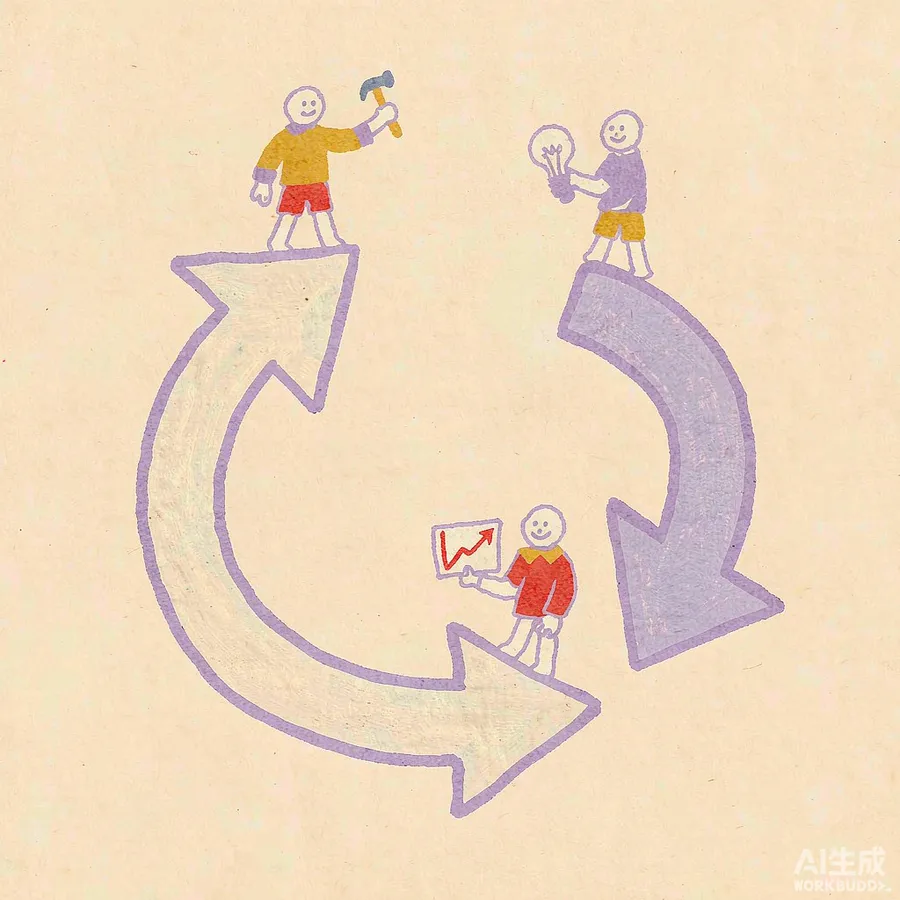
Minimum Viable Product
Ship the smallest thing that tests the riskiest assumption.
The smallest thing that can test the riskiest assumption with real users. Viable refers to the experiment, not to the product.
Time
2-6 weeks
Group
3-8
Output
An MVP and the learning it produced
Move
Prototype
Run sheet
How to run it
4 steps · 2-6 weeks
- 01
Name the riskiest assumption
- 02
Build the smallest test of it
- 03
Release to real users
- 04
Measure the behaviour
Say this
Lines you can read out as they are — no improvising under pressure.
“What would prove us wrong?”
“What is the cheapest way to find out?”
“Who are the first ten users, and how do we reach them?”
Set up
Before they walk in
- □The riskiest assumption written as a falsifiable sentence
- □The smallest test that could disprove it
- □A measurement defined before launch
What to watch for
Signals and traps
It is working when
- the MVP is smaller and more embarrassing than the team expected
It usually fails when
- the MVP becoming a small version of the full product
- no measurement plan
If it stalls, or the room is the wrong size
Variations
Run a concierge version by hand before building
Test demand with a landing page first
Ship to one segment only
Background
Where it comes from
From Eric Ries's The Lean Startup (2011), imported from lean manufacturing and startup practice: if the cost of being wrong is high, shrink the bet until being wrong is cheap.
Cautions
When it does more harm than good
- Name the assumption first or the MVP becomes a small version of the wrong product
- Viability is about learning, not about shipping something embarrassing
- An MVP without a measurement plan teaches nothing
When to use
Reach for it when…
You are starting something new
Uncertainty is high
Source
Ries, E. (2011). The Lean Startup. Crown Business.
Source phase: My methods (Kumar). Steps and the run sheet are written for this library, not quoted from the source.