Build-Measure-Learn
Run the core learning loop of a new venture.
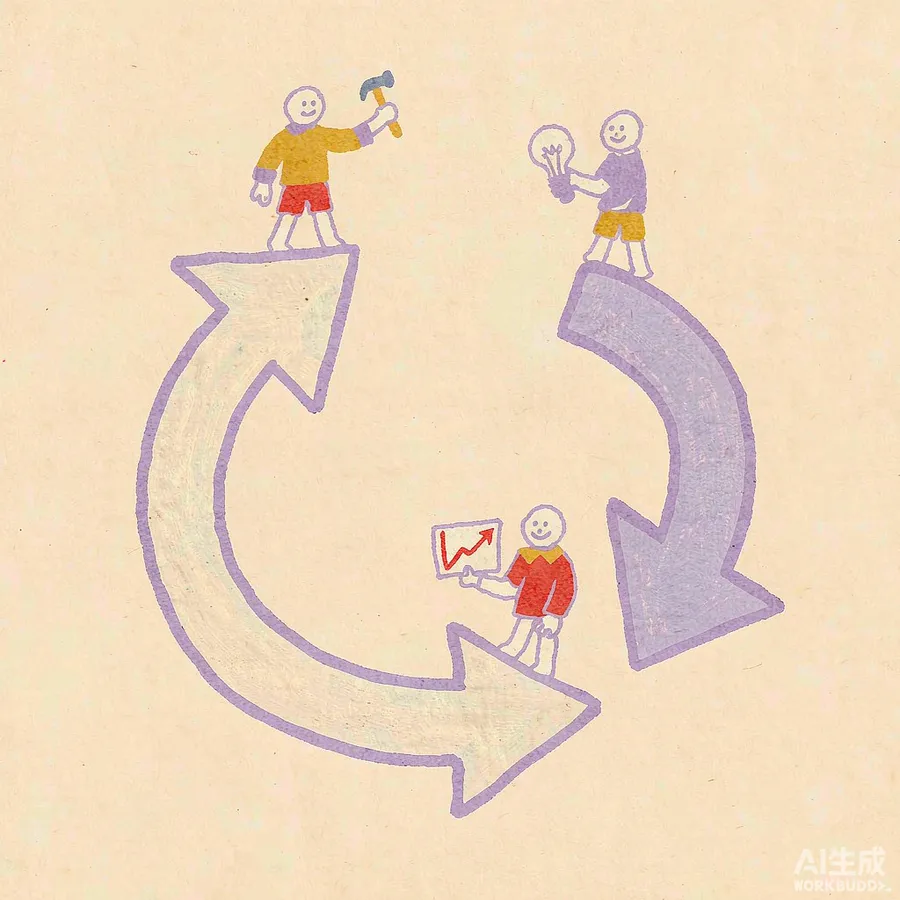
The loop that turns building into learning: smallest increment, real behaviour, interpretation, and an explicit decision to pivot or persevere.
Time
ongoing
Group
3-8
Output
A faster learning loop
Move
Decide
Run sheet
How to run it
4 steps · ongoing
- 01
Build the smallest increment
- 02
Measure real behaviour
- 03
Learn what it means
- 04
Decide whether to pivot or persevere
Say this
Lines you can read out as they are — no improvising under pressure.
“What did we learn that we did not know last month?”
“What would make us pivot?”
“Which part of the loop is slowest?”
Set up
Before they walk in
- □One loop with a named owner and a date
- □A metric that reflects behaviour, not opinion
- □Cohorts small enough to read
What to watch for
Signals and traps
It is working when
- the team changes a plan because of the measurement
It usually fails when
- loops that repeat without a decision
- vanity metrics that only go up
If it stalls, or the room is the wrong size
Variations
Time-box the loop to two weeks
Run the loop on one metric only
Hold a pivot-or-persevere meeting with a written memo
Background
Where it comes from
From The Lean Startup. The loop corrects the habit of building for months and then arguing about whether it worked; the decision point is what teams skip, which is how loops turn into busywork.
Cautions
When it does more harm than good
- If the loop has no decision at the end it is a release process
- Measure behaviour rather than stated preference
- Shorten the loop before adding scope to it
When to use
Reach for it when…
You are running continuous discovery
You need to shorten feedback
Source
Ries, E. (2011). The Lean Startup. Crown Business.
Source phase: My methods (Kumar). Steps and the run sheet are written for this library, not quoted from the source.