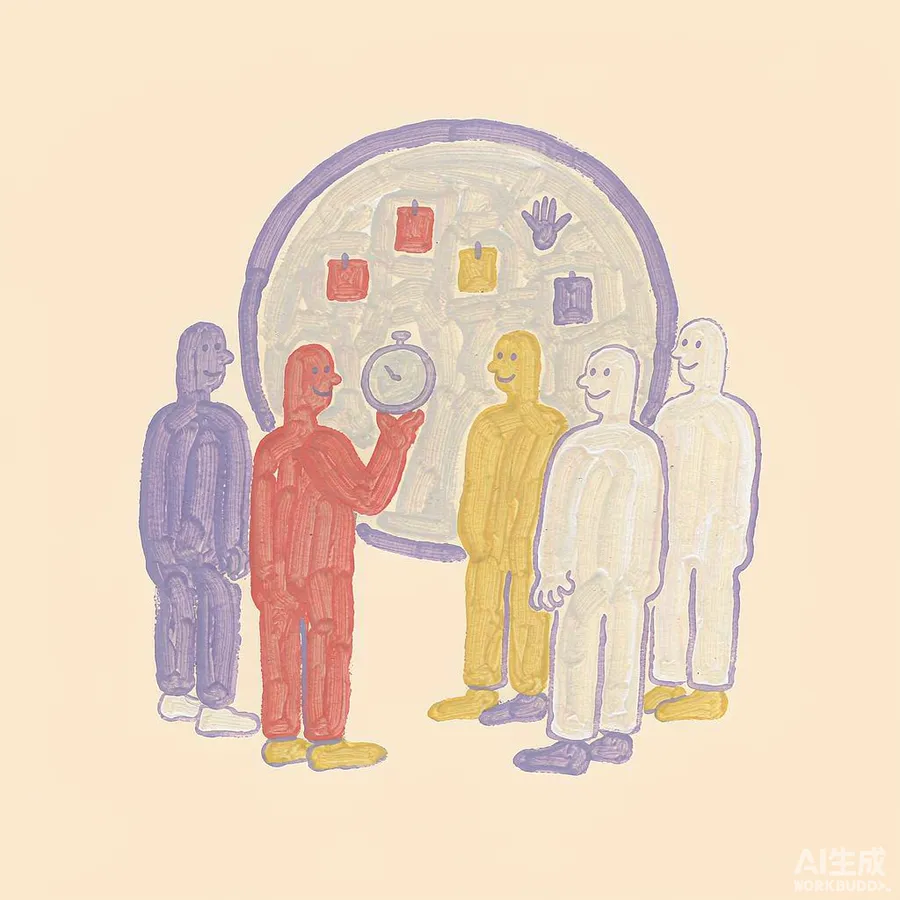
Sprint Planning
Agree a sprint goal and the work that serves it.
The team chooses a sprint goal first, then the items that serve it, and commits to both. The goal is what makes the commitment a decision rather than a list.
Time
2 hours
Group
3-9
Output
A sprint goal and a sprint backlog
Move
Decide
Run sheet
How to run it
4 steps · 2 hours
- 01
Review the refined backlog
- 02
Agree the sprint goal first
- 03
Select the items that serve it
- 04
Commit as a team
Say this
Lines you can read out as they are — no improvising under pressure.
“What single sentence would describe this sprint in two weeks?”
“Which items serve that sentence, and which are just next in the list?”
“What are we not doing this sprint?”
Set up
Before they walk in
- □A refined backlog for the next two sprints
- □The team's recent capacity as data rather than optimism
- □A blank sprint goal on the wall
What to watch for
Signals and traps
It is working when
- the team removes an item because it does not serve the goal
It usually fails when
- the goal written after the items were chosen
- commitment expressed as a number of points
If it stalls, or the room is the wrong size
Variations
Write the goal first, then shop the backlog
Estimate capacity from the last three sprints
Invite the product owner to defend one item only
Background
Where it comes from
From Stellman and Greene's Learning Agile. The order matters: a team that selects items first and derives a goal afterwards fills the sprint with unrelated work, which is why the goal is agreed before the backlog is touched.
Cautions
When it does more harm than good
- A sprint goal that restates the item list is not a goal
- Commit to the goal, not to a number of points
- If the team overcommits every sprint, the capacity estimate is the problem rather than the commitment
When to use
Reach for it when…
A sprint is starting
The team keeps overcommitting
Source
Stellman, A., & Greene, J. (2014). Learning Agile. O'Reilly.
Source phase: My methods (Kumar). Steps and the run sheet are written for this library, not quoted from the source.