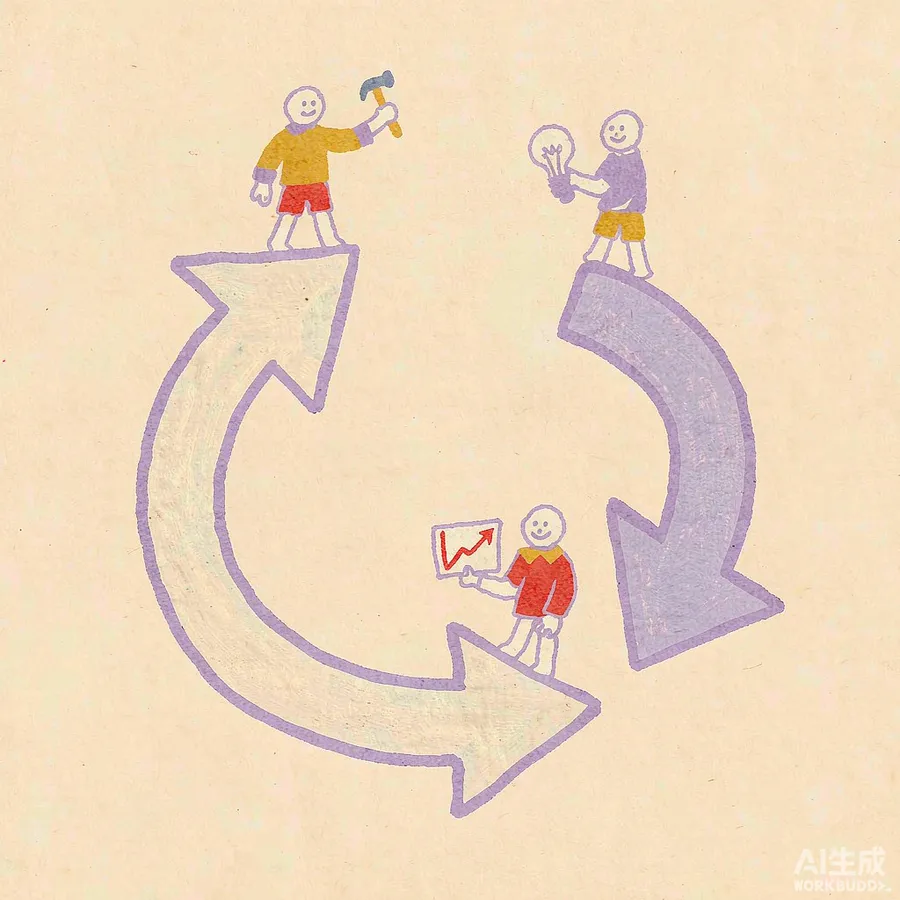
Validated Learning
Measure whether you are learning or only shipping.
Progress measured as what the team now knows for certain, with evidence, rather than what it has built or shipped.

Time
ongoing
Group
2-5
Output
Learning metrics with evidence
Move
Decide
Run sheet
How to run it
4 steps · ongoing
- 01
Define the learning milestones
- 02
Measure real behaviour against them
- 03
Compare with the forecast
- 04
Decide what the evidence means
Say this
Lines you can read out as they are — no improvising under pressure.
“What do we now know that we could not have argued before?”
“Which hypothesis did this kill?”
“What did we expect, and by how much were we wrong?”
Set up
Before they walk in
- □The hypotheses written as testable sentences
- □Behaviour data, not reported satisfaction
- □The forecast you made before the test
What to watch for
Signals and traps
It is working when
- a learning is uncomfortable and gets written down anyway
It usually fails when
- counting experiments rather than learnings
- learnings phrased so nobody could disagree
If it stalls, or the room is the wrong size
Variations
Report one learning per month, in one sentence
Keep a running list of killed hypotheses
Ask an outsider which learning is actually new
Background
Where it comes from
From Eric Ries's The Lean Startup. The unit of progress is a validated learning: a hypothesis that has been tested against real behaviour and can no longer be argued about.
Cautions
When it does more harm than good
- Count learnings that changed a decision, not experiments run
- Activity is not progress
- Write the learning as a sentence someone could disagree with
When to use
Reach for it when…
You are reporting innovation progress
Activity is mistaken for progress
Source
Ries, E. (2011). The Lean Startup. Crown Business.
Source phase: My methods (Kumar). Steps and the run sheet are written for this library, not quoted from the source.