Brainstorming
Generate a broad spread of options fast, without judging them.
The plain version done properly: a question framed as how-might-we, rules stated aloud, silent writing first, then round-robin building. It still works when the mechanics are respected.
Time
45-60 min
Group
5-8
Output
A long raw idea list
Move
Diverge
Run sheet
How to run it
5 steps · 45-60 min
- 01
State the question as a how-might-we
- 02
Set the rules out loud — quantity first
- 03
Run a silent writing round before anyone speaks
- 04
Take ideas round-robin and build on each other
- 05
Capture every idea verbatim before discussing
Say this
Lines you can read out as they are — no improvising under pressure.
“For the next eight minutes nobody evaluates anything, so write first and talk later”
“Build on the last idea before adding a new one”
“Say the half-formed one out loud, even if it sounds stupid”
Set up
Before they walk in
- □The question on a flip chart, big enough to read from the back
- □Sticky notes and one marker per person
- □The four rules posted where everyone can see them
What to watch for
Signals and traps
It is working when
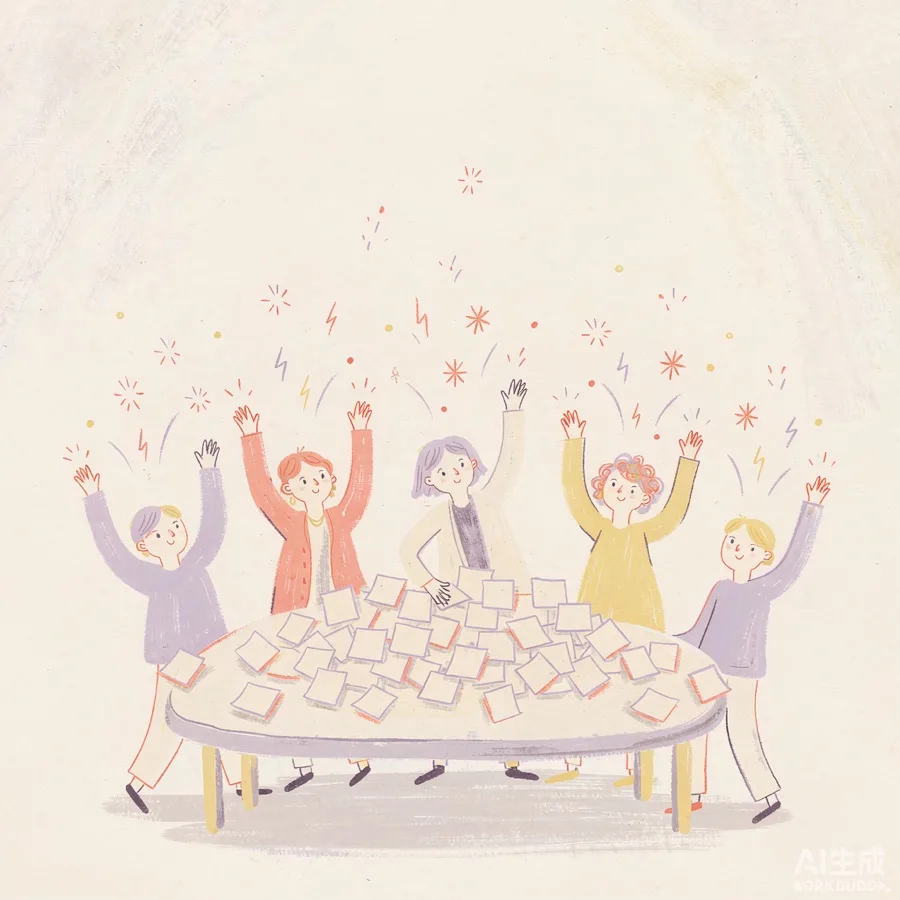
- the noise level rises and people write faster than they speak
It usually fails when
- the most senior person speaks first and the room converges on their idea
- ideas get edited while being said, so only polished ones survive
If it stalls, or the room is the wrong size
Variations
Silent start: eight minutes of written ideas before any speech
Large group: table-level brainstorm, then one idea per table to the plenary
Remote: parallel docs on a shared board with the voice channel muted for round one
Background
Where it comes from
Associated with Alex Osborn, who set out the rules in Applied Imagination (1953). The research critique is well known — nominal groups produce more and more diverse ideas than the same number of people talking — which is exactly why the silent writing round belongs inside it.
Cautions
When it does more harm than good
- State the rules aloud or the first criticism ends the session
- Write before speaking
- Capture verbatim and defer evaluation to a separate step
When to use
Reach for it when…
You need many options fast
The group self-censors early
Source
Osborn, A. F. (1953). Applied Imagination. Charles Scribner's Sons.
Source phase: My methods (Kumar). Steps and the run sheet are written for this library, not quoted from the source.
Pairs well with