Wicked Questions
Surface the paradoxical challenges a group must hold together.
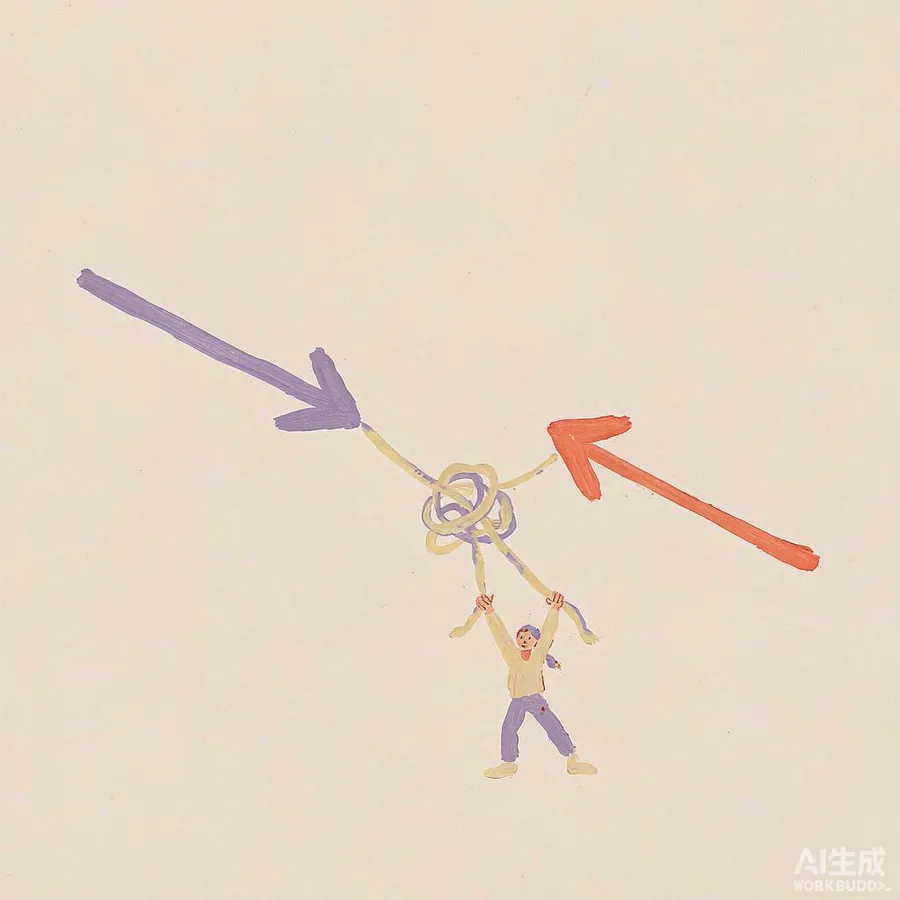
The group writes the contradictions it is actually living with, phrased as questions: we need X and we also need not-X. Those questions become the real agenda.
Time
45 min
Group
4-12
Output
A set of wicked questions
Move
Frame
Run sheet
How to run it
4 steps · 45 min
- 01
State the situation
- 02
Draft questions that contain two opposing truths
- 03
Refine until both sides are real
- 04
Select the ones worth working with
Say this
Lines you can read out as they are — no improvising under pressure.
“What do we need, and what do we also need that pulls the other way?”
“Which of these contradictions do we keep pretending is not there?”
“What would it look like to hold both sides at once?”
Set up
Before they walk in
- □The contradictions the team already senses, written as short prompts
- □Two columns headed we need and we also need
- □Silence rules stated at the start
What to watch for
Signals and traps
It is working when
- somebody finally says the thing everyone has been avoiding
It usually fails when
- questions turn into complaints about another department
- the group tries to resolve the paradox instead of naming it
If it stalls, or the room is the wrong size
Variations
Write the questions in silence, then cluster
Pick one contradiction and design a small experiment around it
Only run it with the sponsor in the room, or not at all
Background
Where it comes from
A Liberating Structures format built on the idea that wicked problems contain paradoxes which cannot be resolved, only named. Naming a contradiction makes it discussable rather than a source of quiet frustration.
Cautions
When it does more harm than good
- Not for problems that are merely complicated — if there is one right answer this is theatre
- The questions have to be honest contradictions, not rhetorical complaints
- Expect discomfort: the room may name things the sponsor did not want named
When to use
Reach for it when…
The group is split into false opposites
Progress stalls
Source
Lipmanowicz, H., & McCandless, K. (2013). The Surprising Power of Liberating Structures.
Source phase: My methods (Kumar). Steps and the run sheet are written for this library, not quoted from the source.