Simple Ethnography
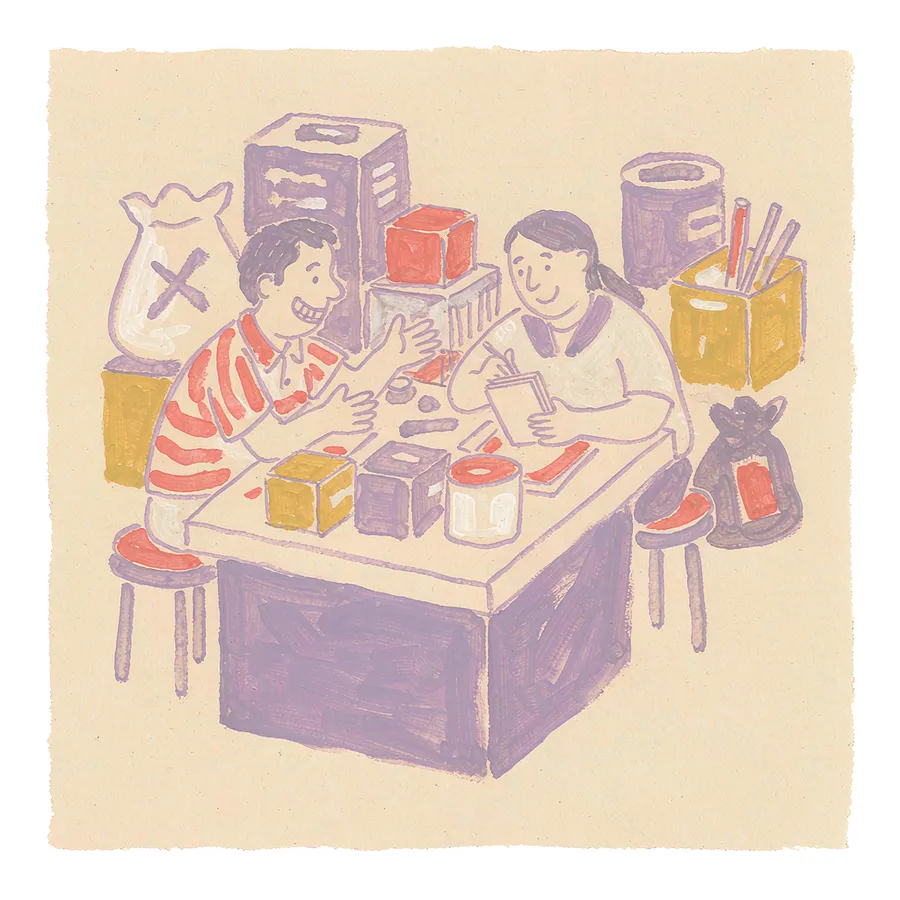
Observe and interview people in their own setting.
Go and watch, quietly, where the thing actually happens, then talk to the people there. It is the lightest version of fieldwork and the one most often skipped.
Time
half day
Group
2-6
Output
Field notes and patterns
Move
Understand
Run sheet
How to run it
4 steps · half day
- 01
Choose a setting and a question
- 02
Observe quietly and take notes
- 03
Interview people where they are
- 04
Share the patterns you noticed
Say this
Lines you can read out as they are — no improvising under pressure.
“What is happening here that nobody planned?”
“Who is working around the process?”
“What would I miss if I only read the report?”
Set up
Before they walk in
- □A setting and one question
- □An hour at the time of day when the activity happens
- □A notebook and permission
What to watch for
Signals and traps
It is working when
- you notice in ten minutes what no interview mentioned
It usually fails when
- standing where people can see you watching them
- writing interpretations instead of observations
If it stalls, or the room is the wrong size
Variations
Go with a colleague and compare notes
Go at the busiest and at the quietest hour
Follow one person for their whole shift
Background
Where it comes from
From Lipmanowicz and McCandless's Liberating Structures, where it is the entry point to seeing a system as it is. Its modesty is the point: an hour in the right place beats a day of meeting-room speculation.
Cautions
When it does more harm than good
- Ask permission and say what you are doing
- Write what you see before you interpret it
- One visit is an anecdote, three visits start to be a pattern
When to use
Reach for it when…
You need unfiltered context
A meeting room would distort the picture
Source
Lipmanowicz, H., & McCandless, K. (2013). The Surprising Power of Liberating Structures.
Source phase: My methods (Kumar). Steps and the run sheet are written for this library, not quoted from the source.