Shift & Share
Run a marketplace of short demos and rotate audiences.
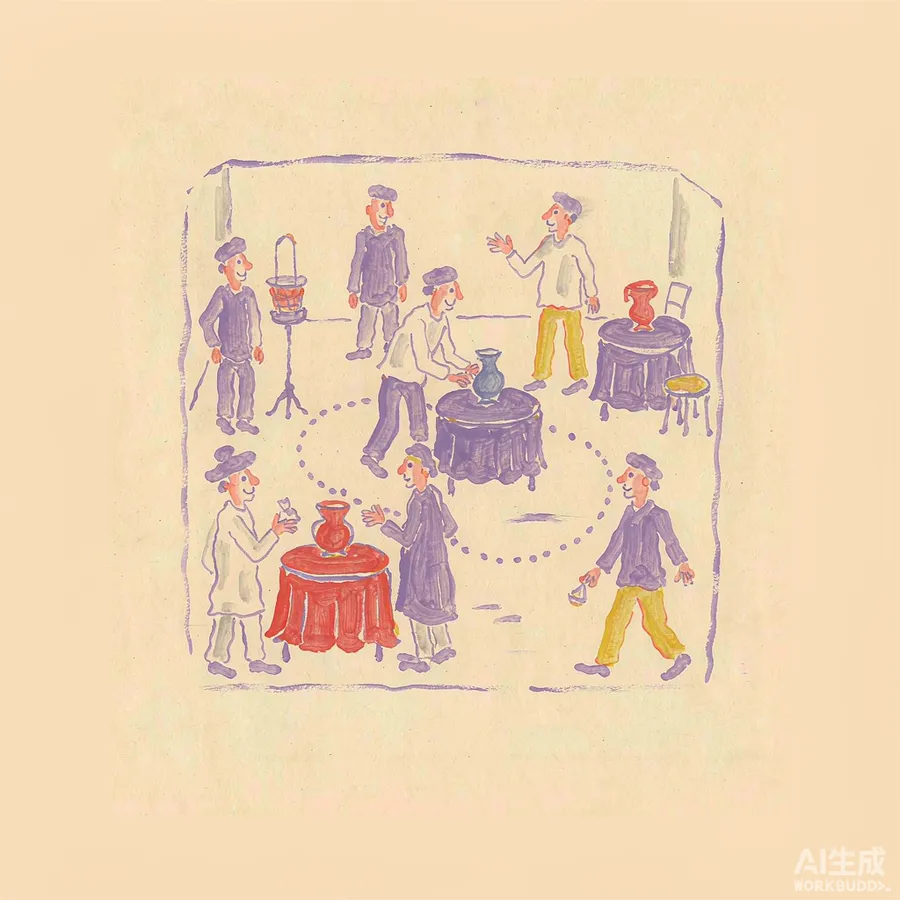
Several stations, each with a team demonstrating its work, and audiences rotating on a timer. It replaces the plenary where fifteen teams present to nobody.
Time
60-90 min
Group
any
Output
Wide exposure and feedback
Move
Decide
Run sheet
How to run it
4 steps · 60-90 min
- 01
Set up stations with presenters
- 02
Audiences rotate on a timer
- 03
Each station demos briefly
- 04
Collect feedback at each station
Say this
Lines you can read out as they are — no improvising under pressure.
“What are you showing that works today?”
“What is the one thing you want feedback on?”
“What would you need to try this in your team?”
Set up
Before they walk in
- □Four to six stations with something to show
- □A rotation schedule with a hard timer
- □A feedback sheet at each station
What to watch for
Signals and traps
It is working when
- visitors ask the same hard question at every station, which is the finding
It usually fails when
- stations become slide presentations
- the timer ignored so the last station gets nobody
If it stalls, or the room is the wrong size
Variations
Rotate presenters instead of audiences
Record a two-minute video per station for absentees
End with one plenary of the recurring questions only
Background
Where it comes from
From Liberating Structures. Rotation raises the ratio of conversation to presentation: each team repeats its story many times and sharpens it, and each visitor arrives with a fresh question.
Cautions
When it does more harm than good
- Fix the rotation time and hold it
- Stations need something to show, not a slide
- Collect feedback at the station rather than in a closing session
When to use
Reach for it when…
Several teams need to show work
A single plenary would be too slow
Source
Lipmanowicz, H., & McCandless, K. (2013). The Surprising Power of Liberating Structures.
Source phase: My methods (Kumar). Steps and the run sheet are written for this library, not quoted from the source.