Drawing Together
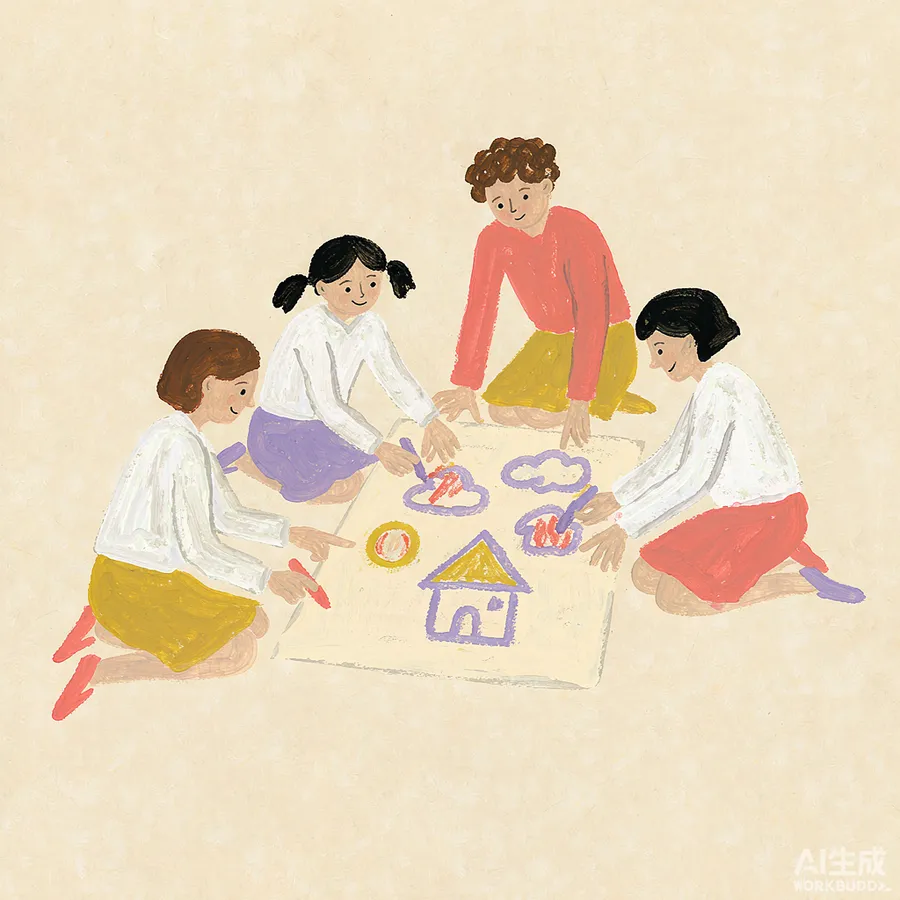
Draw a shared picture of an ideal future.
Small groups draw the ideal state together, adding labels as they go, then compare pictures. Drawing makes disagreement visible before it becomes an argument.
Time
45-60 min
Group
4-20
Output
Shared drawings of the ideal
Move
Diverge
Run sheet
How to run it
4 steps · 45-60 min
- 01
Form small groups
- 02
Each group draws the ideal state
- 03
Add labels as you go
- 04
Present and compare the pictures
Say this
Lines you can read out as they are — no improvising under pressure.
“Draw what this experience feels like, not what it looks like”
“Add to someone else's drawing but never erase theirs”
“What did the picture show that nobody said out loud?”
Set up
Before they walk in
- □One large sheet per table and no individual paper
- □One marker colour per person, all different
- □A prompt that is a feeling rather than a diagram
What to watch for
Signals and traps
It is working when
- the drawing becomes denser where the group disagrees
It usually fails when
- one person takes over the sheet
- the group draws a process map instead of a felt experience
If it stalls, or the room is the wrong size
Variations
Silent drawing for the first five minutes
Draw the before and after states side by side
Remote: shared whiteboard with one area per person
Background
Where it comes from
From Liberating Structures. A shared drawing exposes incompatible assumptions quickly: two people who agree in words will place the same object in different parts of the picture.
Cautions
When it does more harm than good
- Everyone holds a pen at some point
- Label as you go or the picture becomes private
- Compare pictures rather than judging them
When to use
Reach for it when…
Words are not reaching everyone
A vision needs to be co-owned
Source
Lipmanowicz, H., & McCandless, K. (2013). The Surprising Power of Liberating Structures.
Source phase: My methods (Kumar). Steps and the run sheet are written for this library, not quoted from the source.