Diagram and Abstraction
Abstract the concept into a diagram that carries its logic.
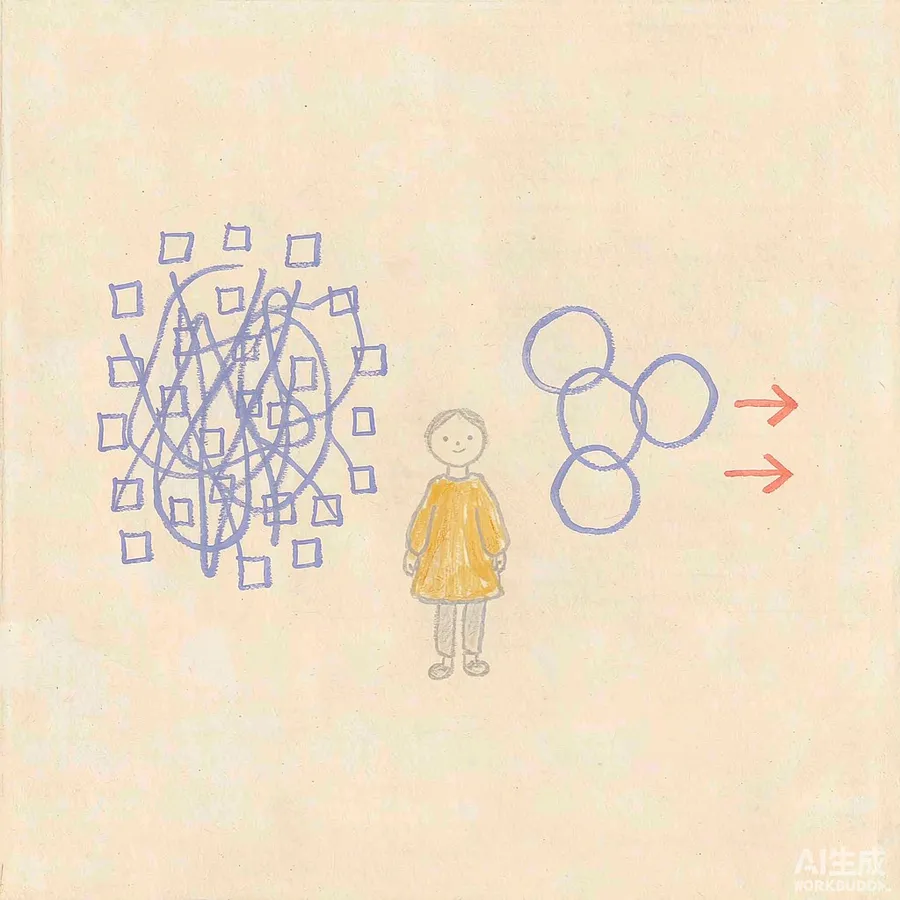
The concept reduced to a diagram of its essential elements and relationships. It is the test of whether the idea is understood or merely described.
Time
2 hours
Group
2-4
Output
A concept diagram
Move
Synthesize
Run sheet
How to run it
4 steps · 2 hours
- 01
Identify the key elements
- 02
Draw the relationships
- 03
Abstract to the essentials
- 04
Test whether others understand it
Say this
Lines you can read out as they are — no improvising under pressure.
“Strip the concept to the three things that must exist for it to work”
“What relationship between these parts creates the value?”
“Which part could be removed without changing the concept?”
Set up
Before they walk in
- □Large paper with one colour per element type
- □The concept's parts listed in words first
- □A rule that only shapes and arrows are allowed, no software icons
What to watch for
Signals and traps
It is working when
- the diagram shows a relationship nobody had drawn before
It usually fails when
- it becomes a system architecture diagram instead of an abstraction
- everything is included, so nothing gets abstracted
If it stalls, or the room is the wrong size
Variations
Redraw at half the size to force selection
Draw the concept as a loop instead of a chain
Brief an outsider from the diagram and see what they misread
Background
Where it comes from
From Kumar's 101 Design Methods. Abstraction is a compression test: anything that cannot be drawn has not yet been decided, and the parts that resist drawing are usually where the argument is unresolved.
Cautions
When it does more harm than good
- Abstract to essentials, not to boxes
- Test the diagram on someone who was not in the discussion
- If it needs a caption, redraw it
When to use
Reach for it when…
The concept is complex
You need clarity for others
Source
Kumar, V. (2012). 101 Design Methods: A Structured Approach for Driving Innovation in Your Organization. John Wiley & Sons.
Source phase: Concept (Kumar). Steps and the run sheet are written for this library, not quoted from the source.