User Group Definition
Define the different kinds of users present in a context by plotting them on attribute scales.
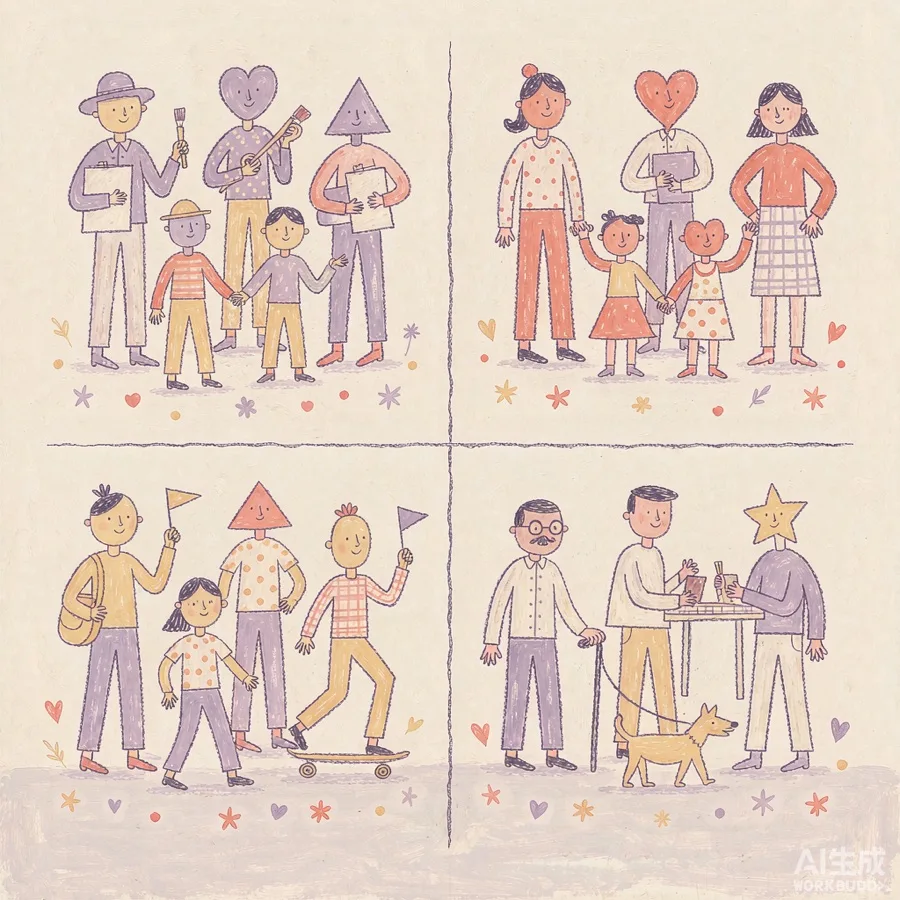
User types plotted on attribute scales until clusters appear, then each cluster named and characterised. It turns a list of people into a small number of groups with different needs.
Time
1–2 hours
Group
3–6
Output
A 2×2 map with named user groups and their common characteristics.
Move
Synthesize
Run sheet
How to run it
6 steps · 1–2 hours
- 01
List user activities and user types.
- 02
Identify attribute scales for comparison.
- 03
Create a 2 × 2 map and plot the user types.
- 04
Define user groups from the resulting clusters.
- 05
Describe common characteristics of each group.
- 06
Discuss and extend the groups with the team.
Say this
Lines you can read out as they are — no improvising under pressure.
“What distinguishes this group's behaviour from the next one's?”
“Which scale actually predicts different needs?”
“Which group is missing from our list?”
Set up
Before they walk in
- □A list of user types and what they do
- □Three candidate attribute scales
- □A large grid with two axes at a time
What to watch for
Signals and traps
It is working when
- a cluster appears that nobody had named
It usually fails when
- demographic scales that do not change behaviour
- groups named after internal segments
If it stalls, or the room is the wrong size
Variations
Try three axis pairs and compare the clusters
Plot individuals rather than types
Test the groups against the interview data
Background
Where it comes from
From Kumar's 101 Design Methods, and a precursor to personas. The mapping step matters: groups defined by a position on a scale can be argued about, while groups defined by a label cannot.
Cautions
When it does more harm than good
- Choose scales that reflect behaviour rather than demographics
- Name the groups in language users would recognise
- Check the clusters against the research before adopting them
When to use
Reach for it when…
Research is done and "the user" is still too broad to design for.
You need to decide which behaviours matter most and group people around them.
Different stakeholders disagree about who the customer actually is.
Source
Kumar, V. (2012). 101 Design Methods. John Wiley & Sons.
Source phase: Analysis (Kumar). Steps and the run sheet are written for this library, not quoted from the source.
Pairs well with