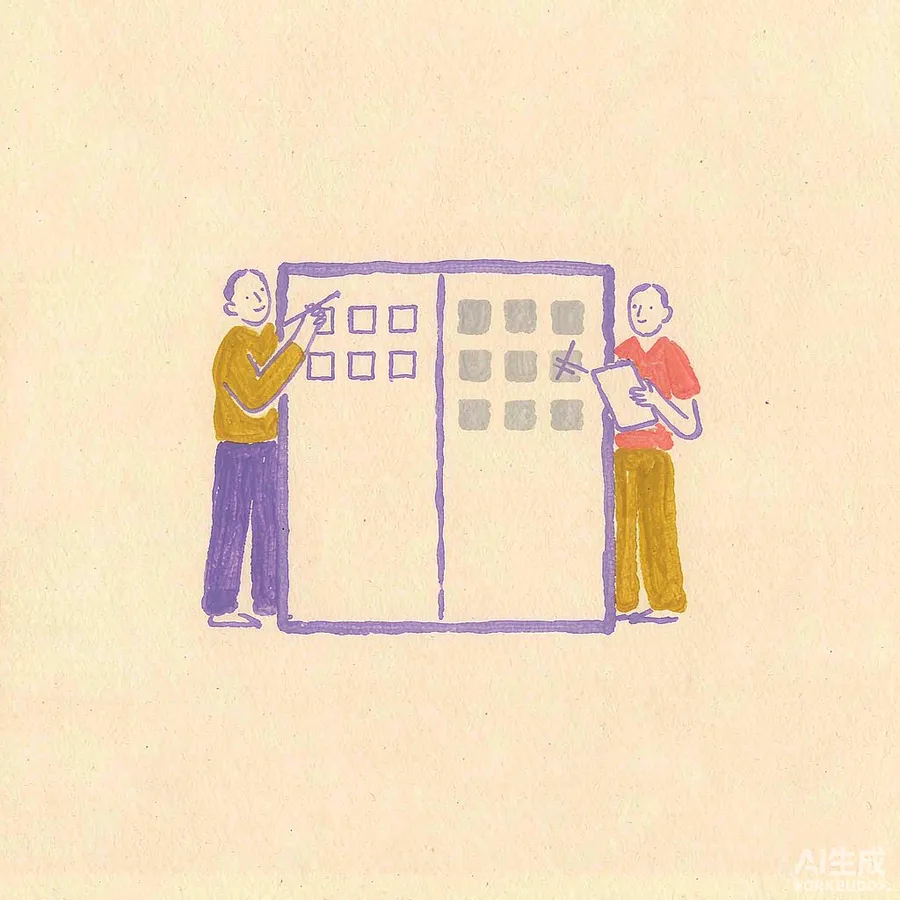
Requirement Schedule
Turn needs into requirements with an explicit priority.
Requirements listed, grouped, rated for importance and satisfaction, then prioritised. The pairing is what separates a real gap from a loud request.

Time
3 hours
Group
3-6
Output
A prioritised requirement schedule
Move
Synthesize
Run sheet
How to run it
4 steps · 3 hours
- 01
List the requirements
- 02
Group them by theme
- 03
Rate importance and satisfaction
- 04
Prioritise them
Say this
Lines you can read out as they are — no improvising under pressure.
“How important is this, and to whom?”
“How well is it served today?”
“What would we cut first if we had to cut half?”
Set up
Before they walk in
- □Requirements gathered from research, not from the backlog
- □An importance rating and a satisfaction rating for each
- □A two-by-two to place them in
What to watch for
Signals and traps
It is working when
- an important and well-served requirement gets dropped
It usually fails when
- importance rated by the loudest voice
- a schedule with forty items
If it stalls, or the room is the wrong size
Variations
Rate satisfaction with users rather than internally
Add a cost column and re-sort
Write the excluded list explicitly
Background
Where it comes from
From Kumar's 101 Design Methods, close to the logic of the Kano model. A requirement that is important but already well served is not an opportunity, while one that is important and badly served is where the work is.
Cautions
When it does more harm than good
- Rate importance from research, not from the loudest stakeholder
- A long schedule is a backlog, not a priority
- Write what is deliberately excluded alongside what is included
When to use
Reach for it when…
You are handing work to build
You are scoping a release
Source
Kumar, V. (2012). 101 Design Methods: A Structured Approach for Driving Innovation in Your Organization. John Wiley & Sons.
Source phase: Analysis (Kumar). Steps and the run sheet are written for this library, not quoted from the source.