Popular Media Scan
Read mass media to surface the cultural narratives and tensions around a topic.
A sweep of what the culture is already saying — ads, front pages, formats, memes — read for the values and tensions underneath. The output is a wall of signals, not a literature review.
Time
2-4 hours
Group
1-3
Output
A trend board of cultural signals
Move
Understand
Run sheet
How to run it
3 steps · 2-4 hours
- 01
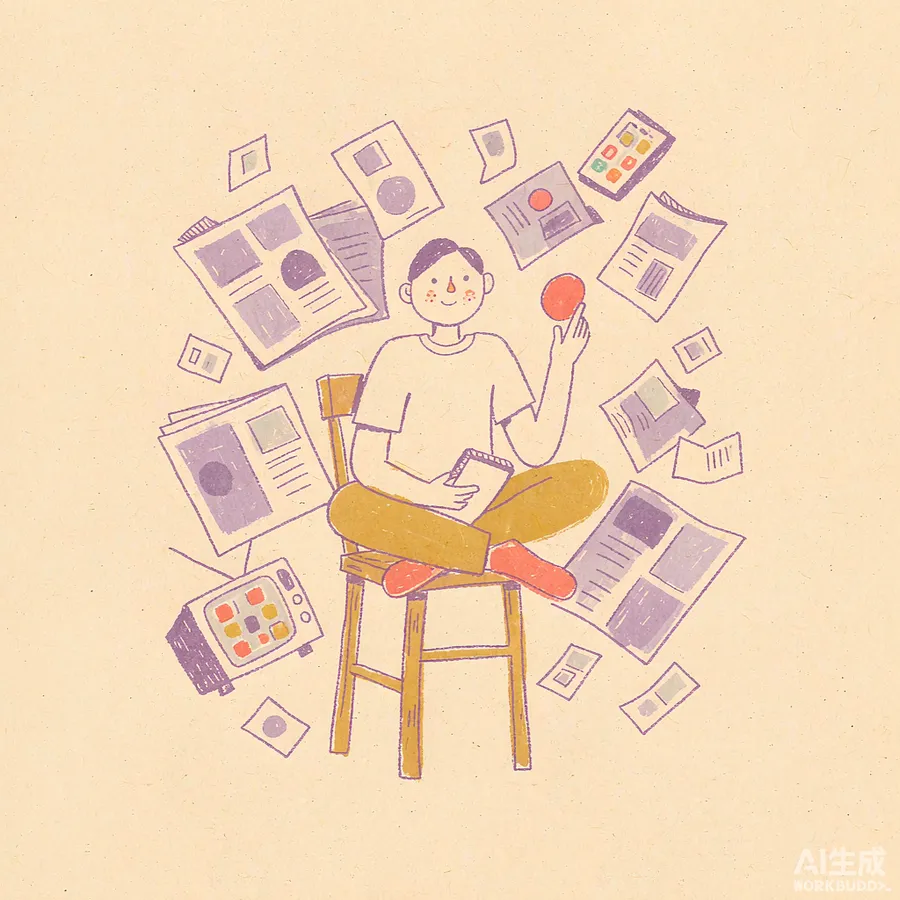
Collect recent mainstream media such as ads shows and news
- 02
Note recurring themes values and tensions
- 03
Cluster the signals that frame the context
Say this
Lines you can read out as they are — no improvising under pressure.
“What does this piece assume about how people want to live?”
“Which value is being sold here, and to whom?”
“What tension does it keep returning to?”
Set up
Before they walk in
- □A week of mainstream sources gathered before the session: ads, front pages, streaming charts, feeds
- □Three colours of sticky note for theme, value and tension
- □A wall wide enough to cluster without crowding
What to watch for
Signals and traps
It is working when
- the same theme appears in three unrelated sources
It usually fails when
- collecting only media that flatters the hypothesis
- reviewing trade press and calling it mass culture
If it stalls, or the room is the wrong size
Variations
Scan one week of a single medium in depth instead of many
Ask everyone to bring one piece of media that annoyed them
Run it before a kickoff and leave the board up for the whole project
Background
Where it comes from
From Kumar's 101 Design Methods, where it sits beside publications research as a way of reading the present before designing for it. Mass media is unusually honest about aspiration because it has to sell to millions of people at once, so what it keeps repeating is what a design team needs to account for.
Cautions
When it does more harm than good
- Do not confuse frequency with importance — a loud narrative can belong to a small segment
- Name the audience of every source, because media aimed at people unlike your users will mislead you
- Without clustering the wall stays decoration rather than evidence
When to use
Reach for it when…
You need context on how people already talk about the topic
You are preparing a kickoff
Source
Kumar, V. (2012). 101 Design Methods: A Structured Approach for Driving Innovation in Your Organization. John Wiley & Sons.
Source phase: Preparation (Kumar). Steps and the run sheet are written for this library, not quoted from the source.