Design Strategy Matrix
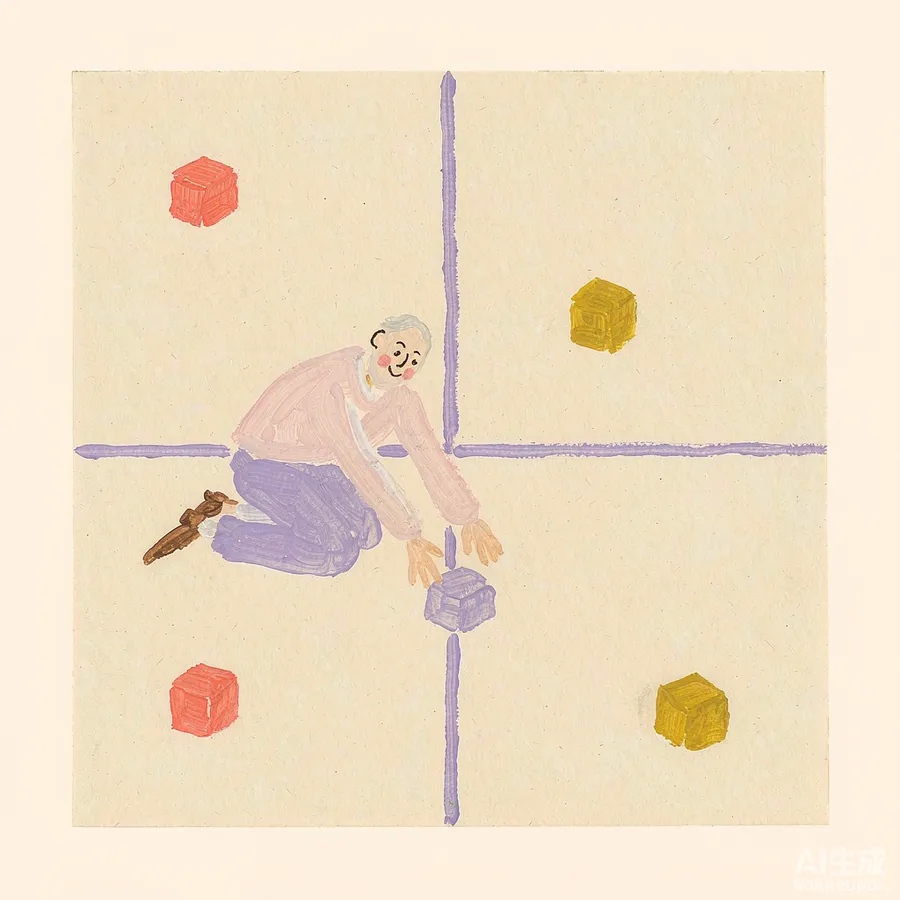
Map candidate strategies on two decisive axes.
Candidate strategies plotted against two decisive axes, so the portfolio's clusters and empty space become visible in one view.
Time
2 hours
Group
3-6
Output
A strategy matrix with positions
Move
Decide
Run sheet
How to run it
4 steps · 2 hours
- 01
List the candidate strategies
- 02
Choose two decisive axes
- 03
Plot the strategies
- 04
Identify clusters and gaps and select
Say this
Lines you can read out as they are — no improvising under pressure.
“What does the horizontal axis really measure?”
“Which quadrant is empty, and why?”
“Is this position defensible for three years?”
Set up
Before they walk in
- □Candidate strategies written as short statements
- □Two axes proposed and argued for
- □A wall large enough to plot and move things
What to watch for
Signals and traps
It is working when
- two strategies collapse into one when plotted honestly
It usually fails when
- axes lifted from a framework without argument
- the matrix drawn after the decision
If it stalls, or the room is the wrong size
Variations
Ask three people to choose axes independently and compare
Plot competitors as well as your own options
Swap the axes to test how much the conclusion depends on them
Background
Where it comes from
From Kumar's 101 Design Methods. The matrix is a decision aid rather than an analysis: choosing the axes is the intellectual work, because the axes encode what the organisation believes success depends on.
Cautions
When it does more harm than good
- Axes copied from a template reproduce the conclusion of whoever used the template
- Two axes cannot carry five dimensions, so accept the loss and name it
- A position is an argument, so write the argument down
When to use
Reach for it when…
You are choosing a direction
A portfolio review
Source
Kumar, V. (2012). 101 Design Methods: A Structured Approach for Driving Innovation in Your Organization. John Wiley & Sons.
Source phase: Exploration (Kumar). Steps and the run sheet are written for this library, not quoted from the source.