Ice Breaker
Warm a group up and lower the social risk of contributing.
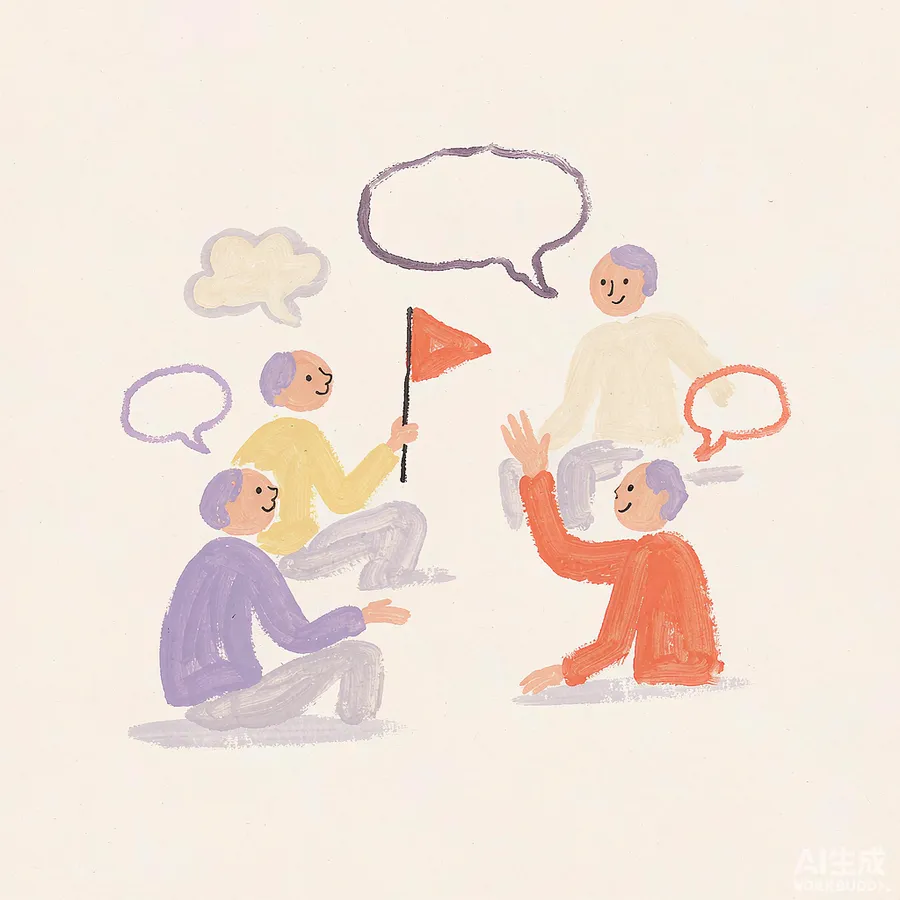
A short structured activity that gives people something to do together before the substantive work starts. Its job is to change the room's default mode, not to entertain.
Time
10-15 min
Group
4-12
Output
A relaxed group ready to contribute
Move
Decide
Run sheet
How to run it
3 steps · 10-15 min
- 01
Choose an activity unrelated to the task
- 02
Keep it short and low risk
- 03
Connect it back to the session theme
Say this
Lines you can read out as they are — no improvising under pressure.
“In one sentence: what do you want to leave today with?”
“Find someone who wants something different from you and compare”
“What would make today a waste of your time?”
Set up
Before they walk in
- □An activity that needs no materials and no disclosure
- □A one-sentence link to the day's topic
- □A visible time limit
What to watch for
Signals and traps
It is working when
- people keep talking after the activity ends
It usually fails when
- the activity requires personal disclosure nobody agreed to
- it runs long and eats the first working block
If it stalls, or the room is the wrong size
Variations
Swap it for a single-question round if the group is senior
Run it online on a shared board
Return to the answers in the closing round
Background
Where it comes from
From Kumar's 101 Design Methods, informed by the facilitation principle that the first ten minutes set the participation pattern for the whole session. A good opener lowers the cost of speaking.
Cautions
When it does more harm than good
- Never use one that requires disclosure the room has not consented to
- If the group already works together daily, a warm-up can insult them
- Keep it under ten minutes and connect it to the topic in one sentence
When to use
Reach for it when…
The group is new to each other
Tension or hierarchy is blocking honesty
Source
Kumar, V. (2012). 101 Design Methods: A Structured Approach for Driving Innovation in Your Organization. John Wiley & Sons.
Source phase: Preparation (Kumar). Steps and the run sheet are written for this library, not quoted from the source.
Pairs well with